
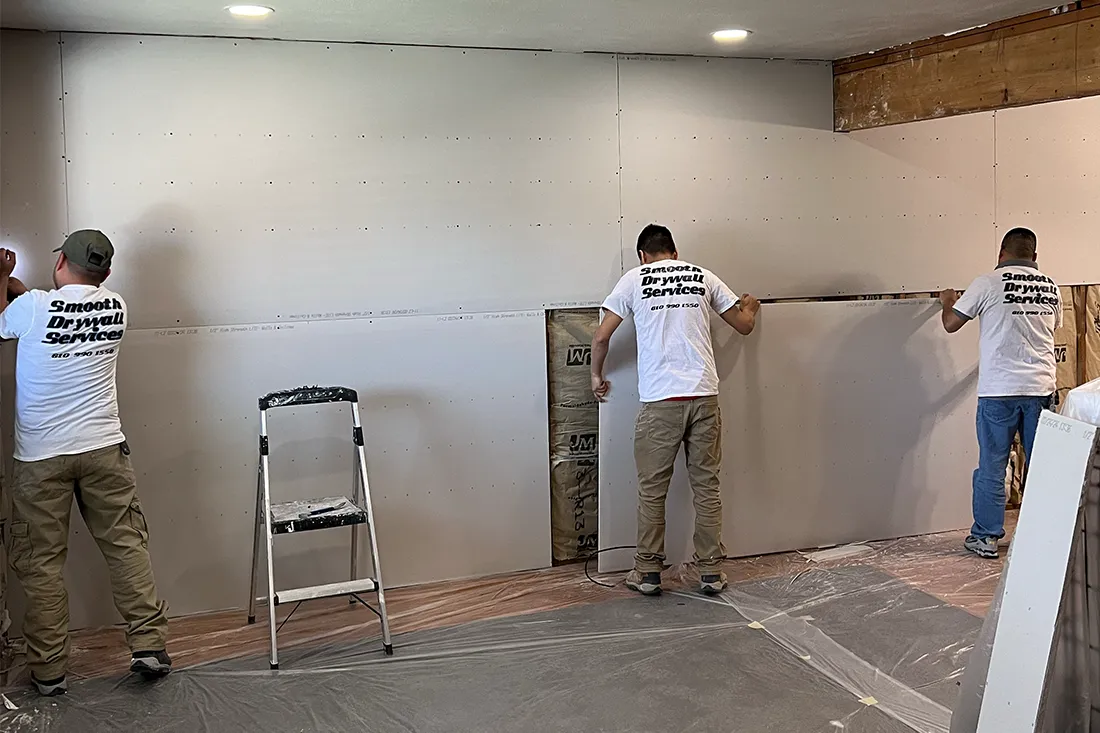
Drywall vs. Plaster: A Montgomery County Guide
Understanding your home's wall construction for better renovation decisions
If you own a home in Montgomery County built before 1950, chances are you have plaster walls. Understanding the difference between plaster and drywall is crucial for any renovation project, repair work, or home improvement decision you'll make.
As specialists in both drywall installation and plaster repair throughout the Philadelphia area, we've worked on countless historic homes and modern constructions. Here's everything you need to know about these two wall systems and how they impact your home improvement projects.
What Is Plaster?
Plaster is a traditional wall construction method that dominated home building from the colonial era through the mid-20th century. In Montgomery County, you'll find plaster walls in historic homes throughout Norristown, Pottstown, Ambler, and other established communities.
Traditional plaster walls consist of three layers applied over wooden strips called lath. The base coat (scratch coat) is pushed through gaps in the lath to create "keys" that lock the plaster in place. A brown coat adds thickness and strength, while the finish coat provides the smooth surface you see.
The entire system, when done properly, creates walls that are incredibly durable and have a distinctive solid feel that many homeowners appreciate.
What Is Drywall?
Drywall (also called sheetrock, wallboard, or gypsum board) became the standard for residential construction after World War II. It consists of a gypsum core sandwiched between paper facings, manufactured in 4x8 foot sheets that can be quickly installed.
The sheets are screwed or nailed directly to wall studs, and the seams are taped and finished with joint compound. A skilled finisher can create a surface that's virtually indistinguishable from plaster once painted.
Drywall's popularity comes from its speed of installation and lower labor costs compared to traditional plaster application.
How to Tell Which You Have
Not sure what's behind your paint? Here are reliable ways to identify your wall type:
- The Knock Test: Knock on your wall. Plaster produces a solid, dense sound with little vibration. Drywall sounds hollow and may vibrate slightly.
- The Pushpin Test: Try pushing a thumbtack into an inconspicuous spot. It slides easily into drywall but won't penetrate plaster without significant force.
- Age of Home: Homes built before 1950 in Montgomery County almost certainly have plaster. Homes built after 1960 typically have drywall. The 1950s were a transition period where you might find either.
- Wall Thickness: Plaster walls are typically thicker (3/4" to 1") than standard drywall (1/2"). Check at an electrical outlet or switch plate.
- Surface Texture: Original plaster often has subtle irregularities and a slightly wavy surface. Modern drywall tends to be perfectly flat.
Pros and Cons: A Direct Comparison
Plaster Advantages
- Superior sound insulation between rooms
- More resistant to dents and impacts
- Better fire resistance than standard drywall
- Adds character and value to historic homes
- Can last over 100 years when properly maintained
Plaster Disadvantages
- Repairs require specialized skills and materials
- Harder to run new electrical or cable wiring
- Cracks develop as homes settle over decades
- Finding qualified repair contractors can be challenging
Drywall Advantages
- Fast installation reduces labor costs
- Easy to repair with basic tools and materials
- Simple to cut for electrical work or renovations
- Widely available contractors and materials
- Consistent, uniform surface for painting
Drywall Disadvantages
- Less sound insulation than plaster
- More susceptible to water damage and mold
- Can be dented or punctured more easily
- Shorter lifespan in high-moisture areas
Repair Considerations
How you approach repairs depends entirely on what type of walls you have.
Plaster repairs range from simple crack filling to full section replacement. Small cracks can often be addressed with flexible filler and proper technique. However, large areas of loose or failing plaster may require cutting out the damaged section and either re-plastering or patching with drywall.
Drywall repairs are generally more straightforward. Small holes can be patched with mesh tape and compound. Larger damage might require cutting out the affected section and installing a new piece. Water-damaged drywall should always be replaced rather than repaired, as the gypsum core degrades when wet.
Pro Tip
Many Montgomery County homeowners with plaster walls opt for a hybrid approach: preserving original plaster in formal living spaces while using drywall in renovated basements, additions, or updated bathrooms. This balances historic character with practical considerations.
Should You Preserve or Replace?
This is the question we hear most from homeowners in Phoenixville, King of Prussia, and other Montgomery County communities with a mix of old and new construction.
Consider preserving plaster when: The walls are in generally good condition with only minor cracking, you value the historic character of your home, or you're in a historic district with renovation guidelines.
Consider replacing with drywall when: Large sections are failing or bulging away from the lath, you're doing major electrical or plumbing work that requires extensive wall access, or moisture damage has compromised the structural integrity.
There's no universal right answer. The best choice depends on your home's condition, your renovation goals, and your budget. We're always happy to provide an honest assessment and discuss your options.
Need Expert Assessment of Your Walls?
Whether you have plaster or drywall, our experienced team can assess your walls and recommend the best approach for your renovation or repair project. We provide honest assessments and quality workmanship.